
 2.svg)



How to test pH of water: pH of water for plants and hydroponics
Test pH of water with a calibrated pH meter. Here you’ll find what pH water plants like, the right pH for hydroponics and rainwater, how to measure accurately, and how to raise or lower the pH.
How do you test pH of water?
You test the pH of water with a pH meter or with pH test strips. The pH scale runs from 0 to 14: below 7 is acidic, 7 is neutral and above 7 is alkaline. In addition, each step is ten times stronger, so water at pH 5 is ten times more acidic than water at pH 6 (USGS).
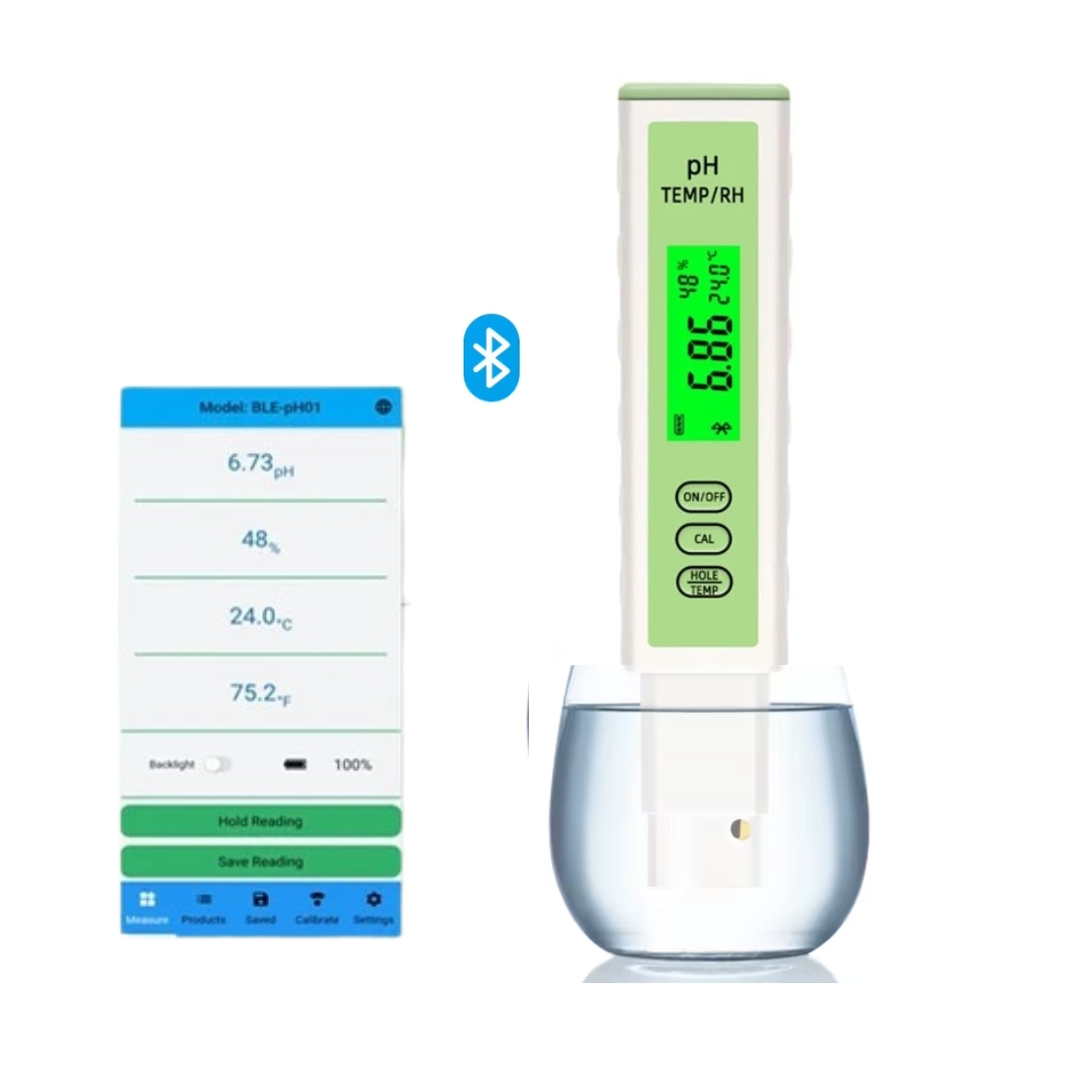
- pH meter with electrode: measures the voltage difference between two electrodes and converts it into a pH value. This is the most accurate method, provided you calibrate the meter (USGS).
- pH test strips or litmus paper: change colour in the liquid. Cheap, but they only give a rough estimate (USGS).
For plants, the pH of water matters, because pH controls how well roots can take up nutrients. That’s why you test regularly, especially in hydroponics, where there is no soil to buffer changes (Oklahoma State University).
What pH is right? Table by type of water
| Type of water | pH | Source |
|---|---|---|
| Hydroponic nutrient solution | 5.0 – 6.0 (usually 5.5) | Oklahoma State University |
| Water for plants (pot and greenhouse) | 5.0 – 7.0 | UMass Amherst |
| Rainwater | about 5.6 | EPA |
| Tap water (EU drinking water standard) | 6.5 – 9.5 | EU Directive 98/83/EC |
Hydroponic pH and EC chart by crop
| Crop | pH | EC (mS/cm) |
|---|---|---|
| Tomato | 6.0 – 6.5 | 2.0 – 4.0 |
| Lettuce | 6.0 – 7.0 | 1.2 – 1.8 |
| Pepper | 5.5 – 6.0 | 0.8 – 1.8 |
| Cucumber | 5.0 – 5.5 | 1.7 – 2.0 |
| Basil | 5.5 – 6.0 | – |
How to test pH of water in 4 steps
- Calibrate the meter. Use buffer solution, usually pH 7 and then pH 4 (or 10). Stir and wait until the reading is stable (Oklahoma State University). Also recalibrate after cleaning the electrode (Hanna Instruments).
- Take a sample. Put water or nutrient solution in a clean cup. In hydroponics, measure EC first and pH second (Oklahoma State University).
- Measure and read. Rinse the electrode, hold it in the liquid, stir briefly and read once the value stops changing. A meter with temperature compensation corrects for warm or cold water itself.
- Measure at a fixed time. In hydroponics, check pH and EC every day at the same time (Oklahoma State University). Check tap water or rainwater now and then, and after every change.
Rinse the electrode after measuring and store it in storage solution, not in distilled or tap water, because that shortens the life of the electrode. A pH electrode typically lasts 1 to 2 years (Hanna Instruments). You can find the manuals for our meters under download manuals.
Test pH of water: test strips or pH meter?
| pH test strips | pH meter (Bluetooth) | EC and pH meter set | |
|---|---|---|---|
| How | Strip in water, compare colour | Electrode in water, value on screen and app | Two meters: pH and nutrient salts |
| Accuracy | Rough estimate | Accurate after calibration | Accurate after calibration |
| Also measures | – | Temperature | EC, TDS and temperature |
| Best for | Quick indication | Tap water, rainwater, aquarium | Hydroponics and liquid fertiliser |
| Example | – | pH meter for liquids | EC and pH meter set |
If you grow hydroponically or use liquid fertiliser, measure both pH and EC: pH tells you whether roots can take up nutrients, EC tells you how much nutrient is in the water. That’s why the EC and pH meter set is the most practical choice. If you only want to check tap water or rainwater for your plants, the pH meter for liquids is enough.
After you test pH of water: lower or raise it
Lower pH (pH down)
If the pH is too high, slowly add a pH down product, such as phosphoric acid or citric acid. Wait a few minutes, stir, measure again and repeat until the pH is right (Oklahoma State University). Always add acid to the water before the fertiliser (UMass Amherst).
Raise pH (pH up)
If the pH is too low, slowly add a pH up product, such as potassium hydroxide or potassium carbonate. Again: small amounts, wait and measure again (Oklahoma State University).
Hard tap water: watch the alkalinity
Tap water in Europe may have a pH of 6.5 to 9.5 and is hard in many regions. For plants, alkalinity (the buffer of lime and bicarbonate) matters more than pH itself: it determines how strongly the water raises the pH of potting mix over time (UMass Amherst). Water with alkalinity above 75 ppm raises pH. You lower alkalinity with acid, an acidic fertiliser or reverse osmosis (Oklahoma State University). Rainwater naturally has a pH of about 5.6 (EPA) and almost no alkalinity.
Our picks to test pH of water
-
 EC and pH meter with BluetoothOriginal price was: €49,95.€39,95Current price is: €39,95.
-
 EC – Liquid conductivity meter with Bluetooth€16,90
-
 pH – Acidity meter for liquids with Bluetooth€16,90
Frequently asked questions about testing pH of water
Testing pH
How do you test the pH of a liquid?
With a pH meter or with pH test strips (litmus paper). A pH meter measures with an electrode and is the most accurate, provided you calibrate it. Test strips change colour and only give a rough estimate (USGS).
What does the pH value mean?
pH shows how acidic or alkaline a liquid is, on a scale from 0 to 14. Below 7 is acidic, 7 is neutral and above 7 is alkaline. The scale is logarithmic: pH 5 is ten times more acidic than pH 6 (USGS).
Can I test pH of water without a meter?
Yes, with pH test strips or litmus paper. However, they only give a rough estimate (USGS). For hydroponics or liquid fertiliser you need a calibrated pH meter.
What pH water do plants like?
Most plants do best with water between pH 5.0 and 7.0 (UMass Amherst). pH determines how well roots can take up nutrients. If the pH is too high or too low, nutrients are in the water, but the plant can’t absorb them well (Oklahoma State University).
Right pH values
What is the right pH for hydroponics?
Keep the nutrient solution between pH 5.0 and 6.0, usually around 5.5. Then the pH at the roots stays around 6 to 6.5. It differs per crop: cucumber 5.0–5.5, pepper 5.5–6.0, tomato 6.0–6.5 (Oklahoma State University).
What pH should tap water have?
In the EU, drinking water must have a pH between 6.5 and 9.5 (EU Drinking Water Directive). Ask your water supplier for the values in your area.
What is the pH of rainwater?
Normal rain has a pH of about 5.6. It is slightly acidic because carbon dioxide from the air dissolves in the rain (EPA). Rainwater also contains almost no lime, so it suits lime-hating plants.
Measuring and adjusting
How do you calibrate a pH meter?
Put the electrode in buffer solution with a known pH, usually first pH 7 and then pH 4 or 10, and set the meter to it. Stir and wait until the reading is stable (Oklahoma State University). Recalibrate after cleaning the electrode (Hanna Instruments).
How do you lower the pH of water?
Slowly add a pH down product, such as phosphoric acid or citric acid. Wait a few minutes, measure again and repeat until the pH is right (Oklahoma State University). Add the acid before the fertiliser (UMass Amherst).
How often should you check pH in hydroponics?
Every day, at the same time. Measure EC first and pH second (Oklahoma State University).
Want to measure the pH of soil instead? Read how to test soil pH. More about nutrient salts and EC under measuring fertiliser, and about watering in the watering plants FAQ.
Not sure which meter you need?
Tell us what you want to measure: tap water, rainwater or your hydroponic nutrient solution. We’ll help you choose the right pH or EC meter, free of charge.
Sources
- Singh & Dunn, Electrical Conductivity and pH Guide for Hydroponics, Oklahoma State University: pH and EC for hydroponics, by crop, adjusting pH
- Water Quality for Crop Production, Greenhouse BMP Manual, UMass Amherst: pH and alkalinity of water for plants
- pH and Water, U.S. Geological Survey: how pH is measured, logarithmic scale
- What is Acid Rain?, U.S. Environmental Protection Agency: pH of rainwater
- EU Drinking Water Directive 98/83/EC, Annex I Part C (indicator parameters): pH standard for drinking water
- Hanna Instruments, Caring for a pH, EC or ORP tester: care and storage of a pH tester
Last updated: 9 November 2026