
 2.svg)



Measure temperature: when is it warm enough for your plant?
Measure temperature in the air for houseplants and in the soil for sowing. Here you can read which temperature range houseplants need, what soil temperature seeds need and how to measure it properly.
Why measure temperature for plants?
If you measure temperature, you know whether it is warm enough for your plant. Temperature determines whether seed germinates and how fast a plant grows. Tomato seed, for example, does not germinate below 10 °C (Alabama Cooperative Extension). Tropical houseplants are damaged below about 10 °C (University of Florida). You cannot judge this well by feel, because soil warms up more slowly than air and differs per spot and per hour of the day (University of Illinois).
That is why you measure two things. For houseplants, you measure the air temperature where the plant stands. For sowing, the vegetable garden and the lawn, you measure the soil temperature with a soil thermometer.

Measure temperature for houseplants: what range is right?
Most houseplants are perfectly happy at normal room temperature. Even so, one spot in your home can differ considerably. That is why it pays to measure where the plant actually stands.
| Situation | Temperature | What it means |
|---|---|---|
| Daytime | 18 – 24 °C (65–75 °F) | Ideal for most houseplants |
| Night | 16 – 18 °C (60–65 °F) | Ideal; slightly cooler than daytime is good |
| Too cold | below 10 °C (50 °F) | Damage possible in tropical plants |
| Chilling injury | 8 – 12 °C (46–54 °F) and lower | Sensitive species are already damaged |
Measure soil temperature: when can you sow?
Each seed has its own germination temperature. Below the minimum, seed does not germinate or does so very slowly. Within the best range, it germinates quickly and evenly. These are the values for well-known vegetables:
| Vegetable | Germinates from | Best range |
|---|---|---|
| Lettuce | 2 °C (35 °F) | 4 – 27 °C |
| Spinach | 2 °C (35 °F) | 7 – 24 °C |
| Pea | 4 °C (40 °F) | 4 – 24 °C |
| Carrot | 4 °C (40 °F) | 7 – 29 °C |
| Radish | 4 °C (40 °F) | 7 – 32 °C |
| Tomato | 10 °C (50 °F) | 21 – 35 °C |
| Bean | 16 °C (60 °F) | 18 – 29 °C |
| Pepper | 16 °C (60 °F) | 18 – 35 °C |
| Cucumber | 16 °C (60 °F) | 16 – 35 °C |
| Courgette | 16 °C (60 °F) | 21 – 35 °C |
Sowing grass seed: what soil temperature?
Grass seed germinates best at 15 to 30 °C, depending on the species. In addition, grass roots grow best at a soil temperature of 10 to 18 °C (Penn State Extension). So do not sow in cold spring soil, because germination will take much longer.
How to measure temperature in 4 steps
- Measure at sowing depth, or at 10 cm (4 inches) deep for transplants (University of Illinois). If the soil is hard, first make a hole with a screwdriver.
- Measure in the morning between 6 and 8 am. That is when the soil is coolest, so you see the lowest value (University of Illinois).
- Measure in several spots and on several days in a row. Sun and air temperature affect the soil, so the average tells you the most.
- For houseplants, measure at the plant’s spot, especially at night and close to the window in winter. A thermometer with an app also shows the lowest value of the night.
Soil thermometer, WiFi thermometer or soil sensor: which suits you?
| Soil thermometer | Indoor WiFi thermometer | WiFi soil sensor | |
|---|---|---|---|
| Measures | Soil temperature via a probe on a cable | Air temperature and humidity | Soil temperature via a stainless steel probe |
| Reading | On the display | On the screen and in the app | On the screen and in the app |
| Remote | No | Yes, with an alarm when too high or too low | Yes, wireless up to 100 metres |
| Best for | Seed trays, propagators, cuttings | Houseplants, conservatory | Vegetable garden, lawn, greenhouse |
| Example | Digital soil thermometer | Indoor WiFi thermometer | Ecowitt soil temperature sensor |
If you mainly sow indoors or in a propagator, choose the digital soil thermometer: the probe stays in the seed tray and you read the temperature outside the tray. For houseplants, the indoor WiFi thermometer is more convenient, because you can set an alarm in the app when it gets too cold or too warm. To follow the soil in your vegetable garden or lawn, even when you are away, choose the Ecowitt soil temperature sensor.
Our recommendations to measure temperature
-
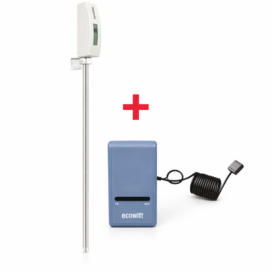 Soil Temperature Sensor with WiFi – EcowittOriginal price was: €74,90.€54,90Current price is: €54,90.
-
 4-in-1 plant soil tester: measures pH value, humidity, temperature and light intensityOriginal price was: €34,90.€24,90Current price is: €24,90.
-
 WiFi sensor temperature and humidity with Tuya Smart Life APP€15,90
-
 Digital soil thermometer€16,90
Frequently asked questions about measuring temperature
Houseplants
What is the ideal temperature range for houseplants?
Most houseplants grow well at 18 to 24 °C (65–75 °F) during the day and 16 to 18 °C (60–65 °F) at night (Iowa State University). An ordinary living room is usually fine. Do watch out for spots near a radiator, a draughty door or cold glass.
What temperature is too cold for houseplants?
Many houseplants come from the tropics. Below about 10 °C (50 °F) they can be damaged, and sensitive species already suffer chilling injury between 8 and 12 °C (46–54 °F) (University of Florida). Rapid temperature changes can also harm some plants (Iowa State University).
When should I bring houseplants back inside?
Bring tropical houseplants inside before night temperatures drop below about 10 °C (50 °F), because below that they can be damaged (University of Florida). Measure at night at the spot where the plant stands, as it is often colder there than the weather forecast suggests.
How do I recognise cold damage on a plant?
With cold damage, leaves quickly go limp and develop water-soaked, glassy patches. Later those patches turn brown, often only once it gets warmer again. The plant also grows more slowly and rot can set in (University of Florida).
Sowing and lawns
What soil temperature do seeds need to germinate?
That varies by vegetable. Lettuce and spinach germinate from about 2 °C (35 °F), carrot, radish and pea from 4 °C (40 °F). Tomato only germinates from 10 °C (50 °F), and beans, peppers, cucumber and courgette from 16 °C (60 °F) (Alabama Cooperative Extension). So start warmth-loving crops indoors or wait until the soil is warm enough.
What is the germination temperature for tomatoes and lettuce?
Tomato germinates from 10 °C, but best between 21 and 35 °C. Lettuce, on the other hand, germinates from 2 °C and best between 4 and 27 °C. Above about 29 °C, lettuce germinates poorly (Alabama Cooperative Extension). In summer, therefore, sow lettuce in a cool spot.
What soil temperature do you need for grass seed?
Grass seed germinates best at 15 to 30 °C (59–86 °F), depending on the species. Perennial ryegrass wants 20 to 30 °C, Kentucky bluegrass 15 to 30 °C. Roots grow best at a soil temperature of 10 to 18 °C (50–65 °F) (Penn State Extension). So do not sow in cold soil, because germination will take much longer.
How to measure soil temperature
How deep should you measure soil temperature?
Measure at the depth at which you sow. For transplants, measure at 10 cm (4 inches) deep (University of Illinois). If the soil is hard, first make a hole with a screwdriver so the probe does not bend.
What time of day should you measure soil temperature?
Measure in the morning between 6 and 8 am, because that is when the soil is coolest. In summer you find the highest temperature in the afternoon between 3 and 5 pm (University of Illinois). Repeat the reading for a few days and take the average.
Why measure yourself when the forecast gives the soil temperature?
The forecast measures at one location. In your own garden, soil temperature depends on sun, shade and air temperature, which differ from spot to spot (University of Illinois). A bed in full sun may already be warm enough while a shady bed is still too cold.
Do you also measure moisture and light? Read how to measure soil moisture and how to measure light intensity.
Not sure which thermometer suits you?
Tell us what you want to measure: the room, the seed tray or the vegetable garden. We are happy to help you choose the right thermometer or sensor for free.
Sources
- Alabama Cooperative Extension (2023), Soil Temperature Conditions for Vegetable Seed Germination (ANR-1061): germination temperature per vegetable
- University of Illinois Extension (2014), Soil Thermometer: A Useful Toolbox Tool: measuring depth, time of day and averaging
- Landschoot (2025), The Cool-Season Turfgrasses, Penn State Extension: grass seed germination and root growth
- Iowa State University Extension, What is the proper temperature for houseplants?: day and night temperature for houseplants
- University of Florida IFAS, Cold Protection of Foliage Plants (EP429): chilling injury and symptoms
Last updated: 29 October 2026